
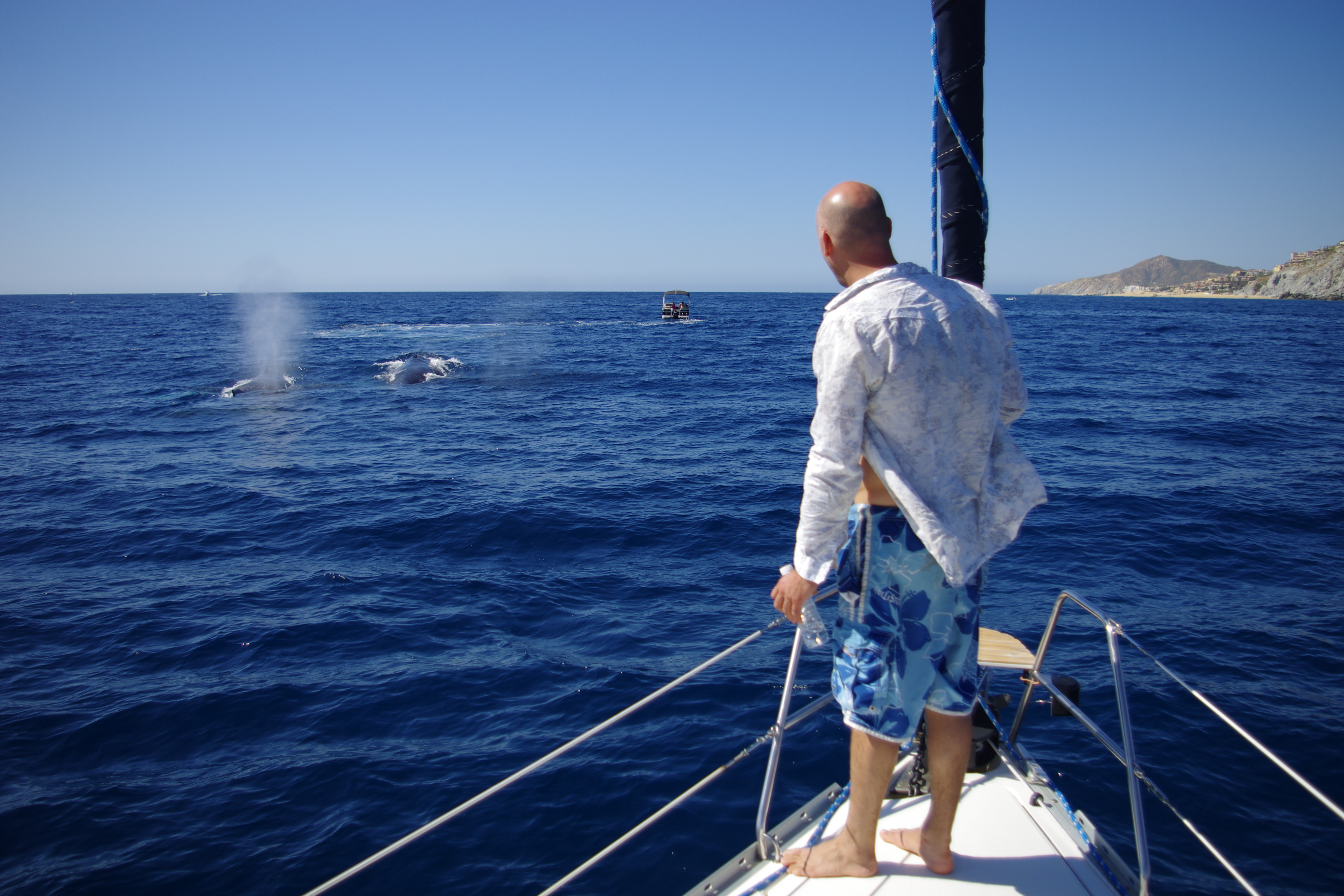
Humpback, gray, blue, fin, sperm, orca — the 6 whale species you can see in Cabo San Lucas. When, where and how to identify each. Local's field guide.
info Quick Facts
Every winter, thousands of whales migrate through the waters off Cabo San Lucas — making it one of the best whale-watching destinations in the world. The warm, sheltered waters of the Sea of Cortez and the nutrient-rich Pacific coast create a natural corridor for six distinct whale species, each with its own size, behavior, and season.
Here’s your complete field guide to the whales of Cabo.
At a glance — 6 whale species comparison
| Species | Size | Season | Likelihood |
|---|---|---|---|
| Humpback whale | 12–16 m (40–52 ft) | Dec–Apr | Common |
| Gray whale | 13–15 m (43–49 ft) | Jan–Mar | Common |
| Blue whale | 25–30 m (82–98 ft) | Jan–Mar | Rare |
| Fin whale | 18–25 m (59–82 ft) | Dec–Apr | Uncommon |
| Sperm whale | 11–18 m (36–59 ft) | Year-round | Uncommon |
| Orca (killer whale) | 6–8 m (20–26 ft) | Year-round | Rare |
1. Humpback whale
The humpback whale (Megaptera novaeangliae) is the star of Cabo whale season. These acrobatic giants travel up to 10,000 km (6,000 miles) from their summer feeding grounds in Alaska to the warm waters of Baja California to breed and calve.
- Size — 12–16 m (40–52 ft), weighing up to 36,000 kg (80,000 lbs)
- Identifying features — long pectoral fins (up to 5 m), knobby head, distinctive tail fluke patterns unique to each individual
- When seen — December through April, peaking in January and February
- Behavior — famous for breaching, tail slapping, and singing. Males produce complex songs that can last for hours
- How common — very common during season. Most whale-watching tours see multiple humpbacks per trip
2. Gray whale
The gray whale (Eschrichtius robustus) makes one of the longest migrations of any mammal — up to 20,000 km (12,000 miles) round trip from Arctic feeding grounds to the lagoons of Baja California.
- Size — 13–15 m (43–49 ft), weighing up to 36,000 kg (80,000 lbs)
- Identifying features — mottled gray skin covered in barnacles and whale lice, no dorsal fin (just a series of bumps along the back)
- When seen — January through March as they pass Cabo on the way to calving lagoons (Magdalena Bay, San Ignacio, Ojo de Liebre)
- Behavior — often seen “spy-hopping” (raising their head vertically out of the water to look around)
- How common — common during peak migration. The Pacific side of Cabo is the best vantage point
3. Blue whale
The blue whale (Balaenoptera musculus) is the largest animal ever to have lived on Earth — larger than any dinosaur.
- Size — 25–30 m (82–98 ft), weighing up to 150,000 kg (330,000 lbs)
- Identifying features — blue-gray coloring, tiny dorsal fin relative to body size, enormous blow (spout) reaching 9 m (30 ft)
- When seen — January through March, primarily in the Sea of Cortez between Loreto and La Paz
- Behavior — typically seen surfacing slowly and diving for long intervals (8–15 minutes). Rarely breaches
- How common — rare off Cabo proper, but sightings do occur. More reliably seen further north in the Sea of Cortez
4. Fin whale
The fin whale (Balaenoptera physalus) is the second-largest animal on the planet, often called the “greyhound of the sea” for its speed.
- Size — 18–25 m (59–82 ft), weighing up to 80,000 kg (176,000 lbs)
- Identifying features — asymmetrical jaw coloring (white on the right side, dark on the left), tall dorsal fin, streamlined body
- When seen — December through April, both in the Pacific and the Sea of Cortez
- Behavior — fast swimmers, can reach 40 km/h (25 mph). Often seen in pairs or small groups
- How common — uncommon but regular. Most sightings are from dedicated whale-watching boats venturing further offshore
5. Sperm whale
The sperm whale (Physeter macrocephalus) is the largest toothed whale and the deepest-diving mammal on Earth, reaching depths of 2,000 m (6,600 ft).
- Size — males up to 18 m (59 ft), females 11 m (36 ft). Males weigh up to 57,000 kg (125,000 lbs)
- Identifying features — massive, blocky head (one-third of body length), wrinkled skin, angled blow (spout goes forward and to the left)
- When seen — year-round in deep waters off the continental shelf
- Behavior — dives lasting 45–90 minutes. When they surface, they often lift their tail fluke high before diving
- How common — uncommon. They prefer deep offshore waters, so sightings from standard tours are infrequent
6. Orca (killer whale)
The orca (Orcinus orca) is technically the largest member of the dolphin family, but its size and predatory behavior put it in a category of its own.
- Size — 6–8 m (20–26 ft), weighing up to 6,000 kg (13,000 lbs)
- Identifying features — unmistakable black-and-white coloring, tall dorsal fin (up to 1.8 m in males), white eye patch
- When seen — year-round, but sightings are unpredictable. Small transient pods pass through Cabo’s waters
- Behavior — apex predators that hunt fish, seals, dolphins, and even other whales. Highly intelligent and social
- How common — rare. Seeing orcas off Cabo is a once-in-a-lifetime experience for most visitors
Best ways to see whales in Cabo
The most reliable way to see whales is on a dedicated whale-watching tour during peak season (December–April). Most tours depart from the Cabo San Lucas marina and head toward the Pacific side, where humpbacks and grays are most active.
- Whale-watching tour — dedicated 2–3 hour trips with experienced captains who know where to find whales. Best odds of close encounters
- Sunset cruise — many sunset tours during winter months spot whales along the route to the Arch
- From shore — the bluff at the Pedregal neighborhood and the viewpoints near the lighthouse offer Pacific views where you can sometimes spot spouts and breaches
- Private charter — flexible timing and route means the captain can follow whale activity
Whale-watching safety rules
Mexican law (NOM-131-SEMARNAT) regulates whale-watching boats to protect migrating whales:
- • Boats must stay at least 30 meters (100 feet) from any whale
- • If a whale approaches closer, the boat must cut its engine and wait
- • Maximum 2 boats within 100 meters of the same whale at any time
- • No chasing, circling, or cutting off a whale’s path
- • Tour operators must have a valid SEMARNAT whale-watching permit
Frequently asked questions
What is the best month to see whales in Cabo?
January and February are the peak months. Humpback and gray whale populations overlap, giving you the best odds of multiple sightings on a single tour. The season runs from mid-December through early April, but the middle of winter is the sweet spot.
Can you swim with whales in Cabo?
No. Swimming with whales is not permitted in Mexico. Federal regulations require boats to maintain a 30-meter distance, and entering the water near whales is prohibited. This protects both the animals and swimmers — a whale’s tail fluke can weigh several hundred kilograms.
Private vs. group whale-watching tour — which is better?
A private tour gives you flexibility on timing, route, and how long you stay near whales. A group tour costs less and still offers excellent sightings — the whales are the same regardless of the boat. For photographers or families with small children, private is usually worth the upgrade.
Are whales dangerous to boats?
Whale-watching boats in Cabo have an excellent safety record. Captains are trained to maintain safe distances, and whales generally ignore or gently avoid boats. Collisions are extremely rare and almost always involve vessels that aren’t following the regulations.
auto_stories More in Activities
Is It Safe for Kids to Snorkel in Cabo? (2026)
Yes — with the right beach, tour, and preparation. Age guidelines, best kid-friendly snorkel spots, gear tips, and how to build confidence. Local's guide.
Los Cabos Open of Surf — Mexico's Premier Surf Event
The Los Cabos Open of Surf at Zippers Beach — history, dates, how to attend, what to expect, and where to watch. Complete guide for spectators.
Snorkel at Lover's Beach — Cabo's Best Spot
Complete Lover's Beach snorkeling guide — how to get there, marine life, best time to go, what to bring, and how it compares to other Cabo snorkel spots.